Start with the town, guild, and dungeon loop
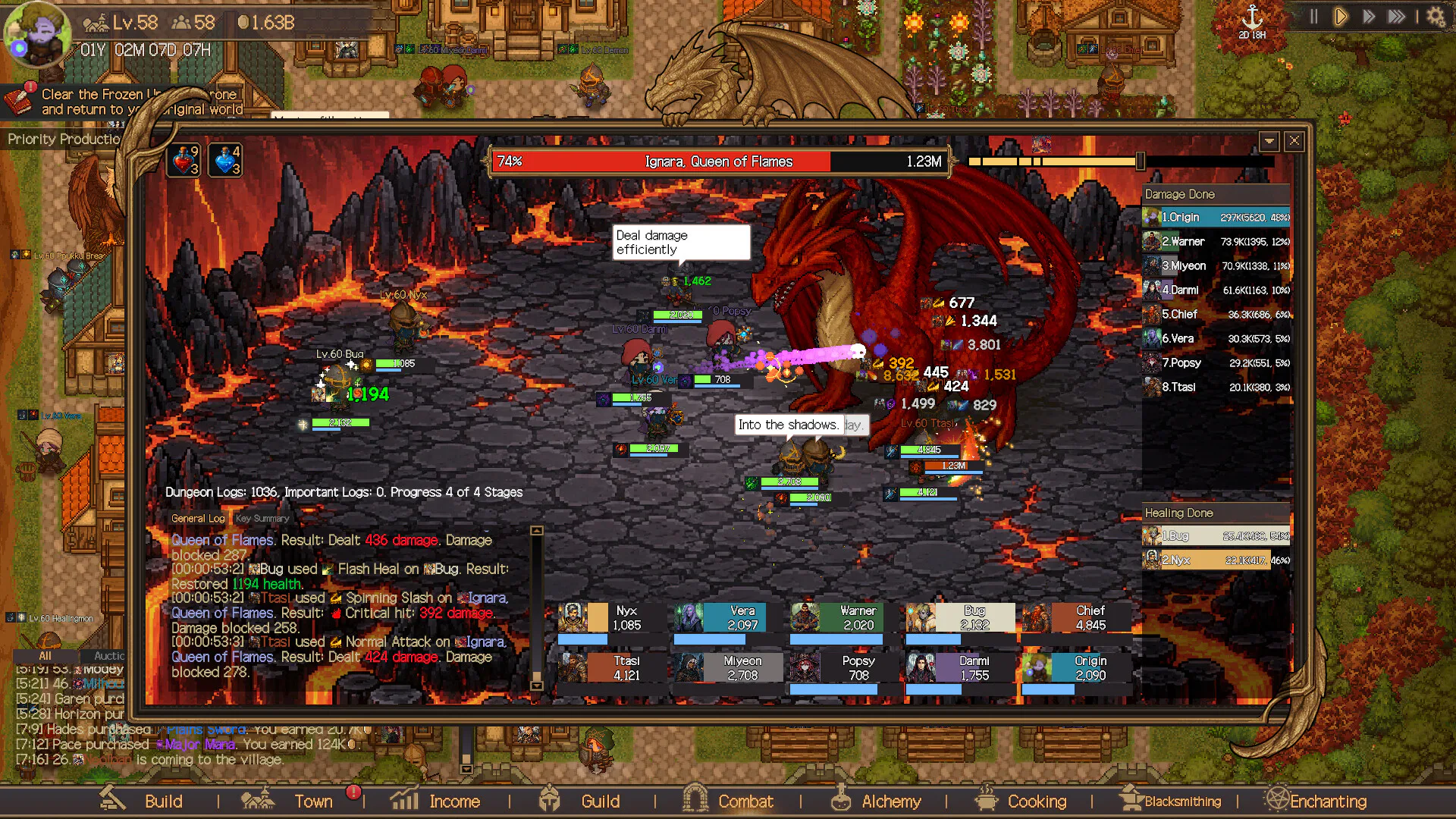
Creator Chronicles links three jobs that are easy to mistake for separate modes. The town produces materials and services, guild members turn those resources into capable parties, and dungeon expeditions return rewards that support the next round of growth. Your first goal is to make that loop reliable. A town full of unfinished facilities or a roster full of untrained recruits gives you more options on paper, but fewer dependable choices when a quest asks for a prepared party.
Use the opening quests as the backbone of progression. They introduce systems in a useful order and keep the next objective visible while you learn the interface. When several upgrades become available, favor the one that removes a current bottleneck: recruit if you cannot form a balanced group, improve production if equipment is holding you back, and return to town growth if basic services cannot support the roster you already have.
Build one dependable party before a large roster
The game includes 120 recruitable guild members with different classes, skills, and abilities. That variety is a long-term collection goal, not a reason to spread early resources across everyone. Begin with a compact core that can cover damage, protection, and recovery. Read each member's actual skills before judging them by class name alone, because two recruits can fill the same broad role in different ways.
Keep a small reserve rather than creating several incomplete teams. A reserve member lets you respond when a dungeon favors a different role or when training reveals a better combination. Review the roster after major unlocks, then decide who receives the next equipment or training investment. This cadence keeps recruitment exciting without turning every new arrival into an immediate resource drain.
Expand production to answer a specific need
Farming, mining, alchemy, cooking, blacksmithing, and enchanting feed the same progression economy. Open each system as the quests introduce it, but do not assume every station needs equal attention. Track what blocks your current objective. If equipment needs metal, improve the mining and smithing path. If expeditions need consumable support, develop the relevant food or potion chain. Purposeful upgrades are easier to sustain than a town that produces a little of everything and finishes nothing.
Keep some materials in reserve before using the auction house or committing to a large craft. New recipes and building upgrades can change what counts as valuable. A simple rule works well early: preserve unfamiliar materials, process common inputs when the output has a known use, and sell surplus only after the next town and party costs are covered.
Treat each expedition as a feedback report
Creator Chronicles has 19 standard dungeons and seven raids. Early expeditions teach the same preparation habits used later: inspect the objective, check party roles, confirm equipment, and avoid sending an untested lineup into the hardest available target. If a run struggles, identify the specific failure before spending broadly. A party that cannot stay active needs a different response from one that survives but lacks damage.
Repeat content when it solves a known problem, not simply because it is available. Target the reward or resource your next improvement needs, make the improvement, and test again. That short loop produces clearer progress than long unattended grinding with no decision between runs.
A practical first-session checklist
Follow the opening quest chain, learn where recruitment and training happen, and assemble one balanced party. Then establish the production chain needed for its first meaningful equipment upgrades. Before ending a session, note one town goal, one roster goal, and one dungeon goal. Those three notes give the next session a clean starting point even after several new systems appear.
The full game has 50 main quests and three endings, so there is no need to solve every system immediately. Steady progress comes from understanding the connection between town, guild, and expedition decisions. Once that connection is clear, the larger roster, advanced crafting, raids, and alternate outcomes become manageable extensions of a loop you already know.